

Careless Strivers
Marty Mauser, Harry Crosby: They wanted so badly to be themselves

Of all the aspects of Sylvia Plath’s relentlessly mythologized life and death, one of the most bewitching is the final, awe-striking burst of inspiration that led her to leave the Ariel manuscript basically finished on her desk. “The child’s cry/ Melts in the wall,” she wrote in the title poem, describing her focus, before indelibly closing it with an image of pursuit: “And I/ Am the arrow/ The dew that flies/ Suicidal, at one with the drive/ Into the red/ Eye, the cauldron of morning.”
Because of her reputation as the Depressive Poetess of America, a reader cursorily familiar with Plath’s trajectory might assume that the force of her genius struck her so violently that it killed her. In truth, the poems are the product of an incredibly ambitious woman at the height of her productivity, formal sophistication and skill. Plath worked very hard, not only to refine her form, but to be a writer at all. She sent her work out tirelessly; she applied for residencies, took workshops, wrote editors, kept her finger on the pulse of contemporary fiction and wrote stories for ladies’ magazines every once in a while, to pay the bills. Plath knew what she wanted––to be a poet––and she pursued it with the purposeful clarity reserved for people who, despite the odds, believe fervently in themselves.
She was a striver, and she was also depressed. One of those descriptions fulfills our expectations of the romantic ideal of the poet––and our thirst for spectacle––better than the other. Had the timelines been reversed, I’m convinced that Harry Crosby, something of a casualty of the so-called Lost Generation, would’ve been an admirer of Plath’s. Not just because of her artistic vision, but also because of the theatricality of her death, the ways in which she accorded to his conviction that the proof of a poet’s genius lay in her madness. That ideal, cherished and relentlessly pursued by Harry, did in fact kill him. He died when he was only 31, in 1929. He shot himself and his mistress, Josephine Rotch Bigelow, in a hotel room in New York. For years, he had written about his death-wish, a suicidal ideation so intense it might be better described as manifestation. “He doesn’t mean it, society says; he’s just being literary,” writes Geoffrey Wolff in his biography of Crosby, Black Sun: The Brief Transit and Violent Eclipse of Harry Crosby. Yet––“Harry meant it.”
Harry Crosby was born in an affluent, important Boston family––his uncle was J. Pierpont Morgan Jr., who was fond of Harry despite his eccentricities, and liked him well enough to plant him at a bank in Paris, a job which Harry left expeditiously, after proving to himself and to everyone else that he had no business being in business. Despite being educated in some of the hoity-toitiest institutions in the country––St. Mark’s, then Harvard––Harry didn’t show much interest in literature until after college. The influence of his distant cousin Walter Berry, an international judge, Parisian legend of the 1920s, owner of an exceptional, hundreds-of-thousands-of-books library, friend of Henry James and Marcel Proust, and confidante-cum-editor-cum-love-object of Edith Wharton, led him to poetry. Harry decided, just like that, with the confidence of someone who has endless resources at their disposal, whose life has been a series of decisions, rather than compromises, to be made, that he was going to be a poet. And poets, as far as he knew, were nuts.
In Paris in the 1920s, there was more than enough evidence to support the idea. Hart Crane, a close friend of the Crosbys, was Exhibit A––his drunken binges made even Harry, who liberally abused opium and drank himself blind, seem conservative. One affecting encounter might have served as a lesson that genius didn’t always––or at least, didn’t have to––follow self-destructiveness. Upon meeting his number one hero, James Joyce, Harry was struck by the domestic plainness of Joyce’s apartment, which was furnished with brown wallpaper and looked, generally, like the house of any random person rather than the house of the person who wrote Ulysses. Harry, by contrast, hung skeletons in his apartment for dramatic effect. When Joyce visited, his vision already compromised, Harry asked him whether he was superstitious as he guided him through the rooms. They were walking under a skeleton; Joyce was not scared.
You can’t teach anyone anything they don’t want to learn, and Crosby followed what he believed to be his potential for genius into destruction. I kept thinking of him this weekend, after watching Marty Supreme. Harry Crosby and Marty Mauser might have been buddies if for no other reason than that they would’ve recognized in each other’s eyes a demented will.
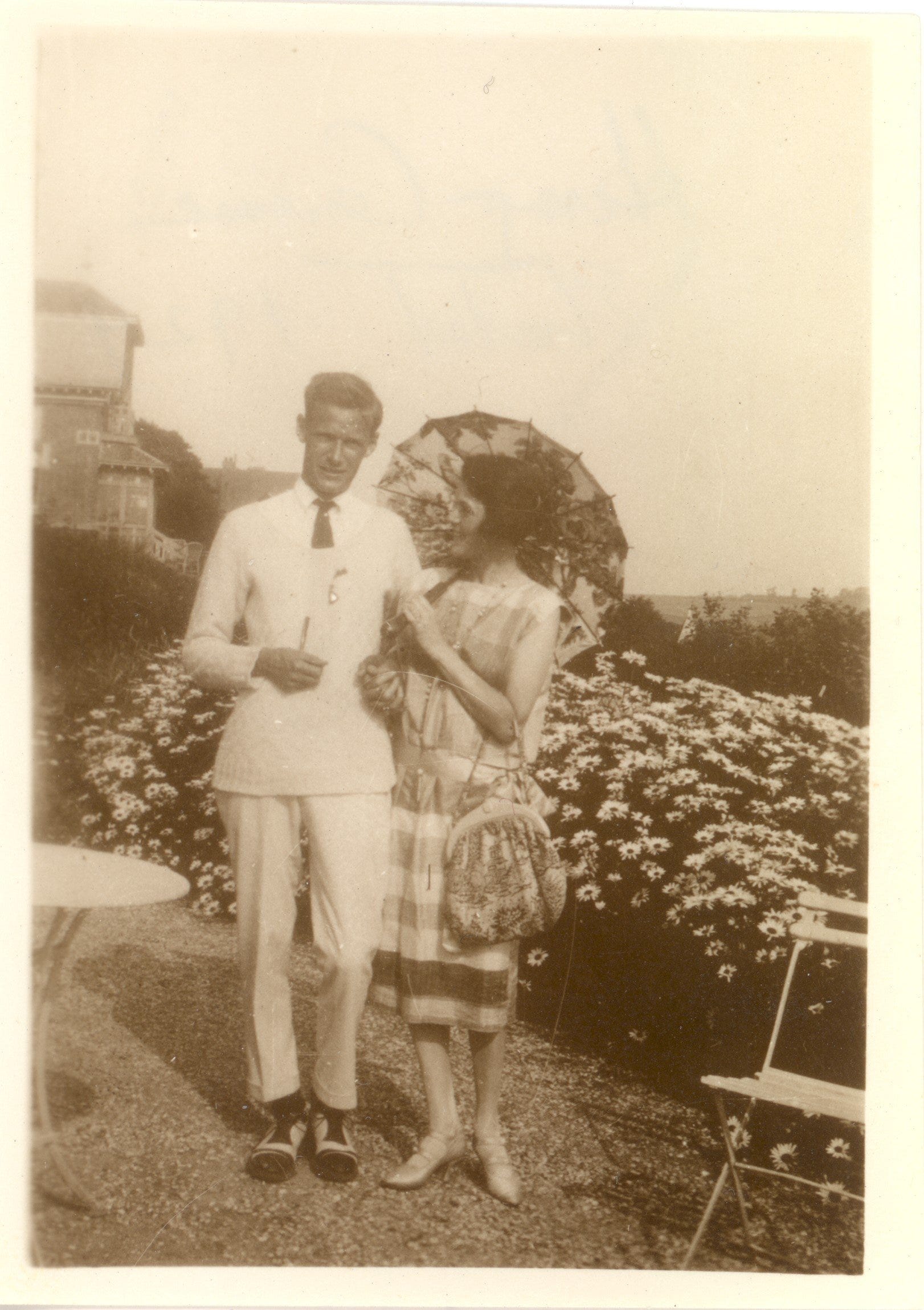
Ambitious though he was, Harry was smart and well-read enough to be painfully aware of his limitations as a poet. Wolff argues that his infatuation with his mania was a “terrible calculation… to short-cut his way to genius by way of madness.” Harry knew D.H. Lawrence and Ernest Hemingway and T.S. Eliot, and despite pining to be counted among their ranks, the frenetic zealotry with which he approached his study of poetry betrays his sense that he would never catch up with them. Casting aside Walter Berry’s advice that “the poetic persona was important but…poetry was the point,” he figured his claim to being a poet lay in the cult of personality. After his death, Harry’s wife, Caresse, commissioned Eliot to write a preface to one of his books. Much like Lawrence, who had been commissioned to write a preface to another of Harry’s books some years before, Eliot skirts around the work. What he and Lawrence could agree on is that Harry was an extraordinary person; the value of his poetry could only be appreciated when taken into account, as Eliot wrote, that “Crosby was in a hurry, I think, because he was aware of a direction, and ignorant of the destination, only conscious that time was short and the terminus a long way off.” In other words: He had to get all this stuff out before it was too late.
Though Marty Mauser is similarly animated by a claim to genius, his ascendence to the pantheon of table tennis players is less filled with self-destruction––table tennis players are not exactly known, like poets, for their Bacchanalian tendencies. If anything, the only adversary who can stump Marty’s game, Koto Endo, baffles him with his humble, introspective skill. Endo is so void of ambition that, after appearing at the British Open out of nowhere, beating Marty, and vaulting to the top of the world ranking, he maintains he wants nothing more than to continue to live his life as a craftsman.
Marty himself believes not only in his potential for genius and greatness but that such limitless powers will change the world. He is not looking to be counted among the James Joyces of his sport but striving to be James Joyce. Throughout the film, Marty insists that it’s a matter of time until table tennis will be considered as elite a sport as tennis, and he presents his own devotion to victory as part-and-parcel of that inevitable conclusion. By believing in himself, he is also believing in the sport, so that they become one and the same. Harry was infatuated with poetry; Marty Mauser was table tennis. As he needs himself in order to realize his own vision, Marty can’t destroy himself in the process of achieving it. But he can destroy everyone––everything––else.
Marty Supreme is obviously not about table tennis as much as it is about the sacrificial nature of Marty’s ambition. He demonstrates a complete lack of regard for the way his antics affect others––most notable are the ways he treats Rachel, his childhood friend and the mother of a child he refuses to acknowledge as his until the very last minute; and his friends Dion and Wally, who do what they can to support his vision. Marty punctuates his departure from every room with a half-hearted, half-mumbled “I love you.” Yet it would be a misjudgment of his character to believe that Marty doesn’t mean it; that he doesn’t love these people. It’s just that the only way he can love another person is by roping them into his love for himself.
You know who that sounds like? Harry Crosby. One of the most affecting moments in Marty Supreme, I thought, was when, driving back from New Jersey in the aftermath of the shoot-out conclusion to Marty’s harebrained dog-ransom scheme, a severely pregnant and injured Rachel asks him if he got the money that they’d been after this whole time, with which Marty intends to go to Japan and get his redemptive victory over Endo. When Marty tells her yes, she beams: “Now you can go to Japan.” Unbeknownst to her, Marty had already secured a way of getting there by agreeing to be publicly humiliated by his perverse benefactor Mr. Rockwell. Rachel believes in Marty as fervently as he believes in himself. She is a casualty to his brashness, but she’s more than a mere victim.
Rachel reminded me of Caresse, Harry’s wife, who was born Polly Peabody, also in Boston, and whose status as something of a black sheep in society went from suggestion to fact after she divorced her first husband, married Harry, and took up a hedonistic lifestyle with him in Paris. Harry had many, many mistresses, but Caresse had her own affairs, too. Friends suggested that her “promiscuity” was less an expression of her own desire as it was a way to endure the lifestyle that was imposed on them by Harry. His escalating mania made Caresse miserable. Early on in their relationship, Harry and Caresse had made a suicide pact, vowing to die on a determined date in the future; as early as his courtship days he had maintained that pure, true, transcendent love existed only in death. In a very unsettling letter to her before they were married, he wrote: “If worse should come to worse and you couldn’t get a divorce…I’ll come down and kill you and then kill myself so that we can go right to Heaven together––and we can die in each other’s arms and I’ll take the blame so you don’t have to worry Dear…”
Wolff doesn’t attempt to determine whether or not Caresse took literally the pact that they had made poetically––or how seriously she took Harry’s…vows? threats? But when the moment finally came for him to act, it was Josephine––whom he loved, but not as fiercely as Caresse; as many women as he declared himself devoted to, it was always Caresse who took prominence––whose death-wish aligned with his own. After Harry’s death, Caresse devoted much of her life to sustaining their joint publishing venture, the Black Sun Press, as well as getting Harry’s work published and critically considered and sharing her grief with his mother. However much of her own sanity and life she had to sacrifice for Harry’s selfish will, she gave herself freely to the upkeep of his memory after he died. She kept giving, even in his absence.
In their own insane, diseased way, they loved each other––and so it is true of Marty and Rachel, and even of Kay Stone, who is herself blindly devoted to her return to the stage. In the brief but telling moment when Marty admits to Kay, in her dressing room, that he stole her costume jewelry thinking it was strung with diamonds, Kay tells him that he doesn’t need to apologize: In his shoes, she would’ve done the same. Marty looks shocked. It hadn’t occurred to him that other people, too, can lie and steal. It maybe hadn’t occurred to him that other people had volitions of their own at all. Marty similarly wakes up from his trance when it emerges that Rachel lied about having been beaten by her husband, Ira, so that she could be close to him. It’s Rachel’s own ambition to share in Marty’s brief glory, and though Marty is aware of her devotion, he can’t understand it. He can’t understand anything that is not his own drive.
That, to me, is the saddest thing.